Pay no attention to the headline of this
blog. Everything is as it should be. Jen from the Block is not tied up in a
closet, fighting for breath. She hasn’t been kidnapped by a gnome named Glenny.
In fact, she’s never even heard of Glenny, and he has certainly not hijacked
her blog. Glenny has no designs on some insubstantial, blathering account of
the publishing industry and how it relates to advertising. A gnome named Glenny
wouldn’t care if Jen ever sells a book or not. I mean to say....er, he wouldn’t
care about all that if he existed. Which he doesn’t.
But if this non-existent gnome named Glenny
had a blog, it would be about how
people shouldn’t pigeonhole gnomes just because some smartass ad writer penned
a campaign for Travelocity, featuring a wizened gnome (that was, I’ll have you
know, washed up long before the audition) who now gets to tramp all over the
world and be filmed lounging poolside and drinking coladas (which is a pansy
drink, btw). To add insult to injury, he sometimes signs autographs. Why would
anyone want his autograph? He’s
nothing more than a Flat Stanley wannabe, gloating about having three
dimensions to make up for his lack of literary connections. Flat Stanley is at
least based on a book, whereas the Travelocity gnome is merely a pawn in some
self-proclaimed ad wunderkind’s demented sales campaign. He is officially a
garden ho, not a beloved icon. He gives us—er, GNOMES in general a bad name and
makes all humans expect such behavior from every plaster creature in a pointed
hat. The madness must end.
Contrary to popular belief, not all gnomes
are pranksters. They don’t control the internet and mess with your computer
files (hackers do), or ravage your tulips before they’ve fully bloomed (that’s
the deer). They don’t move storage boxes around in the attic, nor do they
tunnel under the foundations of your homes, wreaking havoc with the structure. Really,
people, you are getting gnomes mixed up with things like poltergeists and
termites. Nasty nuisances, poltergeists are. And I can’t even think about
termites without itching, so I’ll stop there. Gnomes are different. Most of
us…er, them….are serious-minded
creatures who like to talk about music and philosophize from atop those little
bridges that humans build to get across the koi ponds in their yards. (Or, in
cases where the owner of the yard has fewer resources, gnomes recline on giant,
plastic mushrooms and ponder the universe. It’s like Woodstock for gnomes,
minus the drugs.)
We like to fish. That much is true. (Who
doesn’t?) But we never, ever, ever fish with that moronic smile spread across
our faces. Not to mention, we pin our beards up so they don’t get wet. (Oh
dear, did I say “we”? I don’t know where my mind has gone. Of course I meant
“they.”) There—right there! That’s proof that Jen is not under gnomic
influences, for if she were, her mind would not only be intact, but would linger
on far loftier topics than this blog traditionally tackles.
Because gnomes are deep. Far deeper than former advertising professionals. They dabble in
improving relations between all creatures. They contribute to world peace and
promote great literature. In fact, we…er, they
(I don’t know why I keep doing that) would’ve passed more than 500 writers
through the third phase of the ABNA contest if given a chance. But gnomes
cannot be Vine Reviewers, which—you must admit—is ironic, as there is a
definite garden analogy in play. (Yeah, Amazon didn’t buy it, either.) I bet
you didn’t know that gnomes idolize
writers, EXCEPT, of course, for those who slur gnome reputations and threaten
bodily abuse. Gnomes don't like authors of books like this one which provides a guide to surviving gnome attacks. (Like there's a market for that anyway. Pfft.) Those types of writers need to perish in flames, so it’s a good
thing we don’t know any. A very good thing.
Now since gnomes are a noble lot, an
ancient clan undeserving of being bullied and/or anihilated, we should all be
ashamed of ourselves for targeting them and making their lives a living hell
for the past two months just because we happened to be going through “a thing.” At
the very least, we owe them an apology. Recompense may be addressed to The
Glenny Foundation at notagnome.com
While this is Jen's closet, she is NOT stashed in it.
I, Jen from the Block, being of sound mind
and body (one that is not tied up or otherwise restrained) recommend signing on
to the above web site and making a donation ASAP. As for the pink flamingoes,
the wind chimes, the ceramic geese (be they clothed or un-clothed) and the
Marlboro man-esque cardboard silhouettes, Glenny/Jen says: have at it. They are
abominations to both races: human and gnome. You have my blessing. Carry on!
....and congratulations to the ABNA quarterfinalists.
Someday I will get a
twitter account. Because it’s the wave of the future and all the kids are doing
it and I missed what the stars tweeted on Oscar night, which made me feel all
Norma-Desmond-in-Sunset-Boulevard-depressed. (I’m ready for my close-up, Mr.
DeMille! Bahahahahaha!) Mostly, I want to be schooled in the jargon. Hashtags, ztwitt,
beetweet. Random ## symbols thrown about @ in weird places—it seems so mod.
Let’s face it, in a world where technology reigns supreme, it’s either lead,
follow on twitter, or get out of the way. So I will join…tomorrow if I don’t
talk myself out of it first. By, say, slamming the entire twitter culture with
a blog post. (Yes, this one.)
What are they?
Turn back now if you can’t take some mild
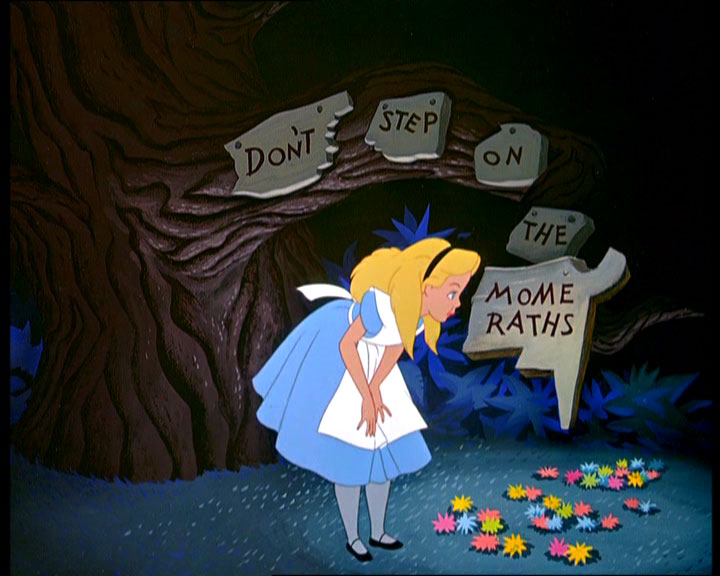
hating on the twitter. (And as you’re leaving be careful not to tread on the
mome-raths.)
Okay, so there might be an argument for chiseling
advice and insight down to a mere 140 characters. We are busier than ever, not
to mention worse readers. Maybe using so few characters builds…um, character. I
mean, isn’t it the same thing as shrinking your baby (and by baby, I mean your
hunkin’ 80,000-word + manuscript) down to fun size? The process is similar to
crafting that concise 300-word teaser, and a pitch is a necessary evil, by all
accounts. But why go there in LIFE? Do we really want to boil all of our
experiences down to one brief line? Put it this way: You might as well be
composing an inscription for your tombstone. (Fun! Fun! Fun!) I hate to be the
bearer of doom and gloom, but each day may be your last. That this very
sentiment has become the mantra of the texting generation is evidenced by songs
like “If I Die Young,” “Like We’re Gonna Die Young” and “If Today Was Your Last
Day.”
If you’re on twitter, that last tweet will define you for all eternity.
Even if it’s: I think that guy who shot his girlfriend woulda put his legs on
even if it was a robber in the bathroom. Hashtag#mootpoint
Or: Even tho I said hold
the pickle, my bitch waitress gave me one anyway and now the juice is all over
my plate. Hashtag#dillcontamination
And now, to my horror—and hopefully
yours—agents have resorted to accepting twitter pitches. If you find a normal
pitch to be a difficult undertaking, try coming up with one that fits the
twitter field. In my opinion it started the trend of using
these incongruous, cloying phrases in describing books. My book is The Clique meets Godzilla
(Cliquezillas!), Night of the Living Dead meets Sesame Street, Jane Eyre meets
Wanna Go Private (Don’t steal that one. It’s mine!), Bridget Jones’ Diary meets
Madmen, Pride and Prejudice meets Keeping Up with the Kardashians, Game of
Thrones meets Toy Story. (If you have a better one—which I’m sure you do—comment.)
While
seeking a job in advertising, I still feel as if employers frown upon a
writer’s offering blog postings, twitter feeds and facebook pages as samples—even
though they may be used effectively as advertising tools. Just like editors and
agents snub experience in the fields of advertising and PR when an author lists such qualifications in queries. This
strikes me as odd, since these fields are obvious extensions of one another--or at the very least complimentary. Case in point: Check out this writing field mashup: Copywriter meets Novelist. (Somehow it
doesn’t sound as weird or controversial as The Girl With the Dragon Tattoo meets Swiss Family Robinson.) So I don't know where that guy on the ABNA threads gets his logic.
But back to twitter. Account or no
account? I guess it all boils down to whether I can tweet in a dignified manner
without feeling that I’m pounding the final nail in the coffin of world
literacy.
Yeah, here’s the thing: Dignified people
don’t generally tweet. The Queen doesn’t. The dalai lama doesn’t—nor does God.
My YA-author idol Gary Paulsen? Ex-nay on the eet-tway. Dear old mom has no
desire to tweet—she never has—and neither does my best friend Jodi, whose own
mother, I might add, is also tweet-less. My uber-accomplished brother doesn’t,
although he has considered blogging. Mr.
Rodgers didn't include twitter in the world of imagination. Big Bird
tweets, but we’ll forgive him, seeing he’s genetically programmed to do so. (Besides,
I read somewhere it’s in his contract.) Do I continue to model my life after
these great people (with an odd Muppet and/or deity thrown in) or emulate the likes of Snooki?
You figure it out.
In the meantime, here
are some Downton Abbey tweets (proving they can be done with dignity).
Mr. Bates to Anna: An acquaintance of mine
who works in the kitchens of the dauphin’s summer chateau sent a French Maid
uniform over. Slip it on and meet me in the stables. #hotwalkingwounded
Lady Sybil to Branson: I’m sending Anna
down with my phone, in part because I know you’re too poor to afford a decent
data plan, and also because I have someone else do all my tasks. She’ll hand
you a message, which she also typed: Do
you want to elope? (with me, not her.) Please give her your reply (she’ll
type it) and send her back to me. #quintessentialdamsel
(That one might be over
140, but oh well.)
The Dowager Countess to Lady Cora: This twatter
nonsense has to be an American invention. #uppitysnob
Matthew to Lady Mary: I
forget, did you reject me or did I reject you? #iceprincess
Carson to the Earl of Grantham:
Very well, sir. #eternallackey
Thomas to anything in
pants: (Insert your choice of lewd Texts From Last Night™ here) #evilsnake
Someone should make an alarm clock that
plays this song. I’d so buy it because even though I don’t work, I still have to get
up at an ungodly hour to face the daily grind. So what if it’s just me forcing
myself to write every day. (Come to think of it, I’m kind of a jerky boss when it comes to granting time
off. On my personal days I’m expected to do laundry and perform
light janitorial duties.)
Before I get down to writing, I have to cattle-prod my three kids onto the school bus and pick up the trail of
disaster left in their wake—discarded pjs, breakfast bowls, pebbles from the
playground that have been dumped out of shoes onto the kitchen floor. This
takes some doing, so a tune like “9 to 5” would provide the kick-in-the-pants
necessary to get me up and on my way, which means I should invent the
aforementioned alarm clock. (Quick! Get Dolly Parton on the line.) There’s always the chance, however miniscule, that I might someday work
9 to 5 (or 6? 7?) again. After all I had a job interview last week the second in six months.
It was a last-minute thing. A human
resources rep called to schedule the meeting for the next morning, and I kind of
had to scramble to get it together—but that’ll be our little secret. The night
before, I sewed some buttons on the sleeves of the classic, tailored shirt I wear on
interviews because the cuffs stick out at odd angles. The shirt itself has hooks and eyes down the front instead of buttons,
which adds charm but is a bitch to do up. (I could wear it on an Amish farm—that
is, if the community accepted someone with my language, which they don’t.) I
had to steal high heels from my daughter, since I don’t do that nonsense
anymore. Even more enjoyable was struggling into pair upon pair of nylons
only to find they all had runs in them. By the time I was through, I felt
like I’d spent forty minutes at the gym, but I was finally dressed (and two
pounds thinner). Oh, corporate America, why do you put yourself through that?
I had to straighten my already straight
hair, because it’s not nearly straight enough
to grace an employable woman’s head. Then I choked down three spoonfuls of
yogurt so I wouldn’t pass out driving. (This while cutting back dramatically on
my usual coffee intake.) I packed up my portfolio and my laptop in case the
employer needed to see the web site that I made a few months ago in order to
appear far techier than I am. After a nerve-racking ride, during which I kept expecting a meteor to burst through the atmosphere, because it was the day one had actually landed in Russia, I made it to the place ten minutes early.
Unfortunately it took me ten minutes to traverse the parking lot, hobbled as I
was by those damn shoes. (They’re not that
high; I guess I'm just uncoordinated.) I got there just in time and was herded into
the office of the associate creative director, whom I’d be filling in for while
she takes a maternity leave if hired. (It’s a temp job, but could lead to permanent. Or
not.)
The job is lovely. Everyone there seems
lovely. The collateral pieces they work on are--you guessed it--lovely. I would be thrilled and blessed to do
that job, even temporarily, because it would be the perfect gig with which to get
my feet wet after all these years. What’s more, I’d feel good about covering
for someone so they could take a longer, worry-free maternity leave. I know how
stressful it was for me to try and concentrate on a new baby while thinking about
what was going on back at the office. My time off for maternity always
fell during times of widespread uncertainty regarding job security, which wasn’t
fun. It seemed like karma to be afforded this opportunity thanks to someone
starting a family, especially since I sometimes feel as if I’ve
sacrificed my career to raise my kids. It didn’t help that my last interview
was going great until the interviewer said straight-out that I would have a
tough time getting a job after spending so much time at home. Needless to say, I didn't get that one.
This interview seemed different in a good
way. Things were going well, until she asked for a longer sample of my writing.
Longer. I felt like saying: “Will 80,000
words do?” and pulling out the manuscript I’d entered to the ABNA, but I
refrained. That’s not what she meant, of course. She wanted a happy medium
between the snippets of copy I’d been trained to write over ten years in
advertising and the novel-length writing style I’ve been honing for the past
five years. I didn’t have it. It left me feeling like my writing is either too
short or too long. Never just right. Here's praying that the Goldilocks Syndrome isn't the kiss of death for me.
That's why I’m even more glad now to have at least made it through the pitch phase of
the ABNA. Many people have objected to that stage, and I can see why. It's hard to pitch a book to a stranger, even harder to pitch an entire career! Maybe I’d
feel differently if I was out, but as it stands I like knowing what’s
expected. In terms of cadence, tone and word-count, I revel in the formula of writing a pitch. A
luxurious three hundred words is plenty of room to be descriptive when one’s
used to chiseling copy down to nubs, mostly to accentuate cool graphics. There
was a time when brevity was the main directive in advertising, and I adapted my long-windedness to accommodate. If anything, I
would’ve thought it would be even more of a requirement now, in the age of Twitter
and Facebook.
So, anyway, I directed the interviewer to
that spanking new web site of mine, where I’m hoping she’ll find what she’s
looking for within the transitory blurbs I wrote to move a reader smoothly through
the work. I also sent some radio spots along. I hope she sees /hears that sense of flow, so important in copy for catalogs,
as well as proof that I can write
longer pieces…when given the luxury. In the meantime, I’m going to invest in a
nice pair of comfy ballet flats.
The musical Les Miserables made a big impression
on me when I first saw it many years ago. Not only did I memorize all the song
lyrics, I used the first few billowing strains of the overture as the music in
my morning newscast for a college project. (It was awesome—way better than that
clichéd morning chorus my classmates used.) It fascinated me how all the music
tracks could be laid on top of one another to great effect, so much so that I might’ve thought to do something like this at my wedding. It wouldn’t
have been called a Flash Mob, because they didn’t exist back then, and I would’ve
had to befriend some professional singers first. It’s obvious this
group has had some vocal training. My wedding guests? Not so much (although after
a few drinks they probably were convinced they sounded like Maria Callas.)
As you all know, the latest movie version
of Les Miz was released over Christmas. The positive response to the film
proves the storyline’s universal appeal. Perhaps it is because the epic tale
includes a little something for everyone—whatever stage of life you happen to
be in. I went in with the prediction that a completely different set of themes
and morales would pop up at me this time around, as I am a long way from where I
started on this journey we like to call life. (Just as all the characters
strayed from the path they’d imagined for themselves.) So, think about it. What
plotline of the epic tale appeals to you most and why? Here. I’ll help break it
down.
A Mother’s
LoveAs I had no kids during my
first exposure to the play, I didn’t quite get this one at the time. Since then
I’ve had an epiphany—or, more accurately three (named Cassie, Bri and
Cam). Everyone knows a good mom will walk to the ends of the earth and back
again to protect her child. Fantine is no different, and I ached for her when
it became clear the arrangement she so painstakingly secured for Cosette would
not last. (She would’ve gotten away with it if it hadn’t been for those
meddling factory workers!) If only I could
find a nice innkeeper man and his wife to take care of my lot while I work.
(Just kidding. I need to have the little rugrats in full view at all times if I’m
to have any peace of mind.)
Forgiveness.
It was a beautiful moment when the priest forgave Valjean his thievery and let
him have that candlestick, thereby changing the course of a man’s life. Thanks
to this compassionate act, Valjean became a mayor instead of some
good-for-nothing lowlife. I’d like to think that things like this might happen,
and I wish I could rewind to the days when I thought it a possibility… But God
Almighty, have you seen what’s happened since? Kwame Kilpatrick. There’s a
mayor that has been let off the hook a few too many times.
Revenge
(a dish best served twenty years later, so it's no wonder it’s cold). This issue rears
its ugly head in every story, various songs and in the latest incarnation of
the old board game Clue: Murder Mystery Mansion. It will be our steady
companion until the end of time. Case in point, that hit show on ABC,
the one based loosely on The Count of Monte Cristo. Reality check: people
don’t spend as much time plotting elaborate plots of revenge anymore. We’re
simply not that smart. So unless they add an app on Facebook, we’ll have to get our
fix through fiction. Yes, revenge makes for a good story, but I have a message for Javert: Seriously, dude. All he did was steal some
freaking bread. Get over it.
Revolution
I
found it interesting that this movie was released on Christmas Day with trailers
meant to make us shiver in anticipation. We couldn’t wait to storm the theatres
for that wonderful musical that not only depicts a world rife with social
injustice and heinous violence, but also centers on a bloody and ironically
ineffectual revolution. Did it occur to anyone else that, considering the vast
disparity between the classes in this country and the state of the economy, we’re
probably closest to our own revolution than we’ve ever been before? Is that
something to be celebrated and anticipated? To me, the timing of this
re-release seemed ominous.
Young
Love Marius and Cosette. They’re young, they’re in love,
they don’t kill people. Snore. Bonnie and Clyde they are not.Various
incarnations of these kids turn up in every play I’ve ever seen, and they
always turn my stomach. To me this is the least interesting tangent of this
classic story. I’m so not a romantic.
Unrequited
Love Or maybe I am, because I feel differently about
Eponine’s doomed love for Marius. This is my favorite, favorite, favorite
sub-plot of Les Miz, and all the years that have passed since I’ve last seen
the musical haven’t changed my feeling on the matter. I relate to Eponine’s
face-pressed-against love’s glass stance in this play. The fact the world is
falling apart around her and she’s still
pining makes her that much more sympathetic. Her character interests more than
Cosette aka Mary Sue ever could. (Have I mentioned I love the underdog?) True, a little drop of rain can’t hurt them,
but the buckets falling from my eyes might drown this enchanting duo, two gleaming
points of the love triangle that never was. Ah, Eponine! Ah, humanity! Ah,
Marius, you are the biggest dolt ever! Oh well. At least my expansive tears
might make the flowers grow.
It Takes
a VillageA good man’s willingness
to raise a stranger’s daughter. So hot. The way those fathering skills just
come out of nowhere. The way Valjean pays it forward. I’m drooling over his
self-sacrifice. It doesn’t hurt that Hugh Jackman is in the role, but honestly,
it doesn’t matter to me who plays Valjean. Nothing sexier than an honorable
man. (Case in point: Bates on Downton Abbey. Every woman I know is lusting after
him, although he’s not what you’d call traditionally handsome.) You gave your
word to a stranger on her deathbed that you’ll take her daughter in. You
promise to raise the girl to the light. And you do—even as the pathological
jailer tries to hunt you down. Jean Valjean, I will love you till the day I die.
Unhygienic
Inns
Bed bugs, rats, phantom charges, seedy managers, over-priced mini-bars (C’mon,
they’re scandalous rip-offs!). This topic is relevant even today. Thank God for hotel.com reviews.
Lecherous
innkeepers, Sexual Harassment in the Workplace and bullying—In
a perfect world Fontine could’ve marched down to human resources and reported
these instances of verbal abuse. It's amazing that this theme seems even MORE relevant today than it did several years ago. Shame on us.
War-bred
Camaraderie Pre 9-11, this had a whole different meaning. Enter the war on terror and the difficulties we're having facilitating our returning milary's transition into the mainstream of society, and it's hard to put this into context.
Everlasting
Life This sub-plot (and the priest’s contribution to the
storyline) had me thinking this might be something my mother would enjoy. Back then it never
would’ve occurred to her to attend a play entitled Les Miserables unless forced. (Back then this was a common lament: Who wants to watch a play about miserable people?) In any case, I never
got a chance to buy her tickets, so I was ecstatic that she saw the movie around
Christmas—and liked it.
Rising
above one’s station A former criminal becomes a mayor. A pious officer of the law is warped by obsession. A young girl desires to rise above her circumstances, yet is content to die in the arms of her secret crush. Armed only with passion for a cause and little or no training, educated men rush into battle and fall. New regimes gain a power they'll eventually abuse and the whole cycle starts again. Les Miz is a story that calls into question whether
the promises of democracy are ever fulfilled. It sure isn’t keeping up
its end of the deal as well as darling Hugh, I mean, Valjean. So, I return again
to my point of the trailer being somewhat ominous.
Yet the powers that be don't seem afraid the peasants will hear echoes of their own circumstances and revolt. And if they're not worried, then neither am I.
Okay, writing peeps. Here’s a topic that
affects us all. Money. It’s obvious by the way we’re scrambling for the
sweetened, $50,000 pot that Amazon is awarding in this year’s annual
breakthrough novel contest. Drip. Drip. Hear that? That’s the sound of 10,000
writers drooling simultaneously. Nothing to be ashamed of, folks. The green
stuff comes in handy. Wifi’s gotta work. Kids've gotta eat. My question is once we make it—get the contract or take the plunge of self-publishing, rake in
the dough, garner good reviews, attract the readers—what if someone balks at paying
for the product?
I follow a catchy blog called The Red Pen
of Doom which, this week, featured a guest blogger who reviewed a romance novel
by Kat Martin (Deep Blue). I’ve never read any of this writer’s work and probably never
will now, thanks to a review that concluded with a demand for money back. Plus
tax. (Does a reviewer even have to pay for the book?)
Okay, so maybe the demand was simply to
prove a point, but it got me wondering what you guys think of this trend.
Should booksellers refund money to readers who are dissatisfied with a book? How
can one be sure that such things don’t stem from an ideological difference
between the author and reader? I worked in retail. I totally get the mentality
that the customer is always right—and in cases of bad editing, sub-par quality
of download, other technical issues, I’m on the side of the consumer. But what’s
to stop people from reading books and saying
they’re dissatisfied just to get it free? We’re on the honor code here—and need
I point out that society is getting less and less honorable as we speak?
By all means, let's throw her another bone.
For example, I could buy 50 Shades of
Grey, even though I find both the subject matter and the syntax repulsive. I
could read it in order to see what all the hype’s about and then demand a
refund, which if granted will have allowed me to read the book without
contributing to the author’s dubious success. Will I do that? No. I only buy
books I have an actual interest in reading, and very rarely spend money on even
these. (For those of you tempted to sneeze the word “cheapskate” into your
palms: Yep, that’s me.) I’m a huge proponent of the public library.
Not to mention, deep.
The last
two books I purchased were Holly Schindler’s A Blue So Dark and Sarah Darer Littman's Wanna Go Private. I absolutely loved A Blue So Dark, and hated Wanna
Go Private, which I reviewed on Goodreads, although briefly. I only ordered
the latter book because it dealt with Internet safety and I am in the process
of revising a middle-grade mystery set against the backdrop of social networking.
I wanted to see how another author handled themes of cyber- safety, and, as far
as I was concerned, this mission was accomplished. In my opinion, Littman handled
this topic badly, with cardboard characters from the 50s that seemed transplanted
into this decade and exposed to porn. There were many objectionable, downright creepy scenes that were painful to read, as well as a predictable ending. I
chalked that ten bucks up to research, and got on with it.
Even though I was
disappointed with my selection, I recognized the author's triumph in
getting it published, for it was a
publishable book, just not my taste. Now it sits on a shelf of my bedroom, for
I can’t in good faith recommend it to my daughter, even though I think the
subject matter is important, especially for her age group. In the closet of that
same bedroom hangs a pair of leather pants that I bought eight years ago. I wore
them once and then decided I am just not the kind of gal who can get away with
wearing leather pants. Will I be returning to the boutique and asking for my
money back? Not in this lifetime. We make choices, and sometimes they’re…unfortunate. Not everything's like the picture.
Chalk it up to a fleeting insanity, and move on.
I checked out the reviews of Easily Amused, by Karen McQuestion, a
previous ABNA participant now in print, and was surprised to see that she’d popped
in with a personal response to a one-star review. McQuestion politely suggested
that the reader call Customer Service to get her money back. It might be
brilliant marketing, but it made my stomach queasy. Authors get so little that is
tangible from the sale of the book as it is. Just the pride of attaining a
dream, seeing their name (and oftentimes a pen name) in print, some good
reviews, the admiration of their peers and 20% (if they’re lucky). Dissatisfied readers have the chance to leave a negative review, and that should be enough
recompense. Granting refunds sets a scary precedent, in my opinion. What
say you?
To put things into perspective,
this is Earth from Voyager 1 in 1990.
First off, thanks
to all you ABNA-ers who have stopped by. That’s why I love the contest. Such a
good kick in the pants to do productive writerly things. While I didn’t have
much work to do on my manuscript (since I’ve been fanatically editing all
year and have rewritten the pitch more times than I’m willing to admit) you
guys have inspired me to beef up my blog.
Today I’ve got geography on the brain. I wonder
if you are like me in thinking that where you're born (and where you live now)
affects your writing.
I am from Detroit. I grew up here. I get the D. Granted, I
don’t live downtown, but Detroit is the nearest metropolitan area, not to
mention the skin crinkle on my hand to which I point when people ask where I’m
from. I attended college there, which was a wonderful, formative experience,
and worked for many years on automotive ads that symbolize the city and its
peeps. Detroit seeps into my writing in sometimes subtle, sometimes glaring
ways. Do you feel the same? Perhaps there are cities you’ve lived in that show
up in your writing more than others? Let me know in comments, s’il vous plait.
Not Imported From Detroit. Just set there.
In my case Detroit
adds a layer of rage, drive and grit to my characters. (What do you expect from
people living in the shadow of a huge fist?) I sense a like feel in the works
of other writers who hail from the area. By the same token, I can always
spot an author who tries to “write Detroit” without ever having been here. An
example that comes to mind is Linda Howard in Mr. Perfect. She does her research and tries to get it down pat, but
there is something lacking. I can almost envision her as she picks some Detroiter’s brain via phone (she admits as much in her acknowledgements), instead of making the requisite road trip. (In all fairness, who wants to come here?) As a result, the worship of cars isn't as seamless as it should be, and appears to be photoshopped in, as incongruous as a Hemi engine on a Volkswagen bug. Howard has no grasp of how the love of cars is woven intricately into our lives.
Similarly, I remember reading
somewhere that Stephenie Meyer resorted to Google in her search for an atmosphere in
which vampires could thrive. That's how she came up with Washington. Because of this, I'd argue that her depiction of the area is as
soulless as the Cullens. In contrast, Debbie Macomber’s work (Yeah, Debbie, Linda Howard. I read
romance. Wanna make something of it?) brings
to life the majesty of the Pacific Northwest in her Cedar Cove series. Her love for the geography she's chosen for her characters shines
out of every paper pore (or pixel for you ebook junkies).
I feel
strongly that we must build our worlds on a firm
foundation of reality if we are using a real-world locale. Take my advice. Don’t
try to fudge it. The people who populate those actual places will end up feeling resentful, and that is hard
to get around, no matter how good the story.
Hi, my name is Jennifer and I’m a
Catholic. (Hi, Jennifer.) Not that there’s anything wrong with that. I just
never thought it was really relevant to my writing life. In fact, I considered
not being one any longer. I began to think about my religious beliefs and found
that I was wavering in them. I mean, I don’t condone running around killing
other people obviously, and I ally myself with the vast majority of religious people
who can guarantee we’re on our way to hell in a hand-basket. I feel like I
should stop…you know, get off this crazy thing…but I can’t.
While I still go to church, it’s mainly because
I have kids and I feel they deserve a certain amount of stability. Meanwhile, my real religion, literature, is a secret. It has to be, because people wouldn’t understand how
it's possible. They wouldn't see how it has been a religion of sorts for me all along. Check it out: I enter a
library and my knees quake at the sight of all those books. Then my spine gets
in on the action. I might as well be in St. Peter’s Basilica for all the
chills riding up and down it. Authors? They’re like hallowed saints to me (except
for E.L. James.) Who better to model one's life after? That settles it. Writing is my new religion. Or so I thought,
until they changed the words.
You heard correctly! They
switched around the words of the Roman Catholic mass. The change-up was
allegedly an attempt to bring it closer to the Latin original, but it leaves me—and
many others seated near me every Sunday—faltering. See, my whole life when I
heard a priest say, “The Lord be with you,” I would automatically respond, “And
also with you.” Like a robot. (Try it. It’s kind of fun. Get a room full of
Catholics, blurt out the following key phrases and watch them drop everything
and answer all together. “This is the Word of the Lord” yields a “Thanks be to
God. “Body of Christ” = “Amen” Blood of Christ = ditto.) Go ahead and laugh.
We’ll thank you for it, because that would make us “persecuted for God,” which should garner us major Brownie points in the form of the kingdom of Heaven. (This according to
the Beatitudes.)
Anyway, as I was saying, they made these
changes, nothing major--just enough to drive everyone batty. Now when Father
says, “The Lord be with you,” we say “And with your spirit.” (Which, you’ve got
to admit, sounds nice in an Avatar-ish sort of way.) Oh, we still spew out
peacebewithyou whenever someone shakes our hand in church (although hopefully
we remember NOT to do this in, like, an interview.) We still say amen when offered
the Host. At funerals we crumble into “As it was in the beginning is now and
ever shall be. A world without end.” But when we line up for communion, we are now
supposed to say this befuddling phrase: “Lord, I am not worthy that you should enter under my roof (Old
wording is: to receive you), but only say the word and my soul shall be healed.”
Then, later we add a “holy” before church. One would think that would be no biggie.
But it is! It’s harder because the changes
are so minimal. A total revamp would be better. A word or two, here and there,
a coin of phrase, is almost like stumbling upon an old revision when you know
you’ve updated the draft. Almost impossible to sort it out. Yet, these changes
have made me pay attention to the words for the first time in a gazillion
years. Before, I droned them from my trancelike state (not inspired by
religious fervor, I regret to say), whereas now
I have to actually think about the words to keep from messing them up. I think
this shows surprising insight for an institution as old and set in its ways as
the Church. It almost seems like…progress. Nah.
While I may not end up being Catholic in the
end, I was raised so, and that is bound to show up in my writing. The only
reason it hasn’t yet probably has to do with the fact that I write YA. Nothing
makes the kids’ eyes glaze over faster than a foray into boring religion. Now
that I am winding down my first adult novel, a murder-mystery/romance, I must
deal with the inevitable. Catholicism will rear its thorn-encircled head,
especially since the heroine was raised Catholic, just like me. She’s searching
in the story, for a soul mate, for the solution to a violent crime at her
workplace, for meaning in various familial relationships. As is the case with
most searching, just when you think you’ve found what you were looking for, the
rug gets pulled out from under you. They change the freaking words at church.
Or the murderer tries to bump you off. In either case, you wind up taking stock
of what you stand for. Which is a good thing, right?